Behind Every Smooth Shipment Is a Smoother Process
In logistics, the spotlight is always on cargo — containers, flights, vessels, and deliveries. Customers track shipments. Teams monitor transit times. Managers focus on moving freight faster and safer.
But what truly keeps shipments moving without delays isn’t just transportation.
It’s the process behind the cargo.
The Invisible Engine of Logistics
Every shipment triggers a chain of operational activities:
- Booking confirmations
- Shipping instructions
- Bill of Lading drafts
- Documentation checks
- Customs filing support
- Delivery orders
- Invoice processing
- System updates
These tasks may not move physically — but if they stop, cargo stops too.
The Modern Logistics Challenge
As shipment volumes grow, logistics companies face three major pressures:
1. Rising operational workload
More shipments = more documentation and coordination.
2. Cost of in-house expansion
Hiring, training, and infrastructure add overheads.
3. Turnaround time expectations
Customers want faster updates and zero errors.
Balancing all three internally is difficult.
A Smarter Operational Model
Forward-thinking logistics providers are adopting a hybrid structure:
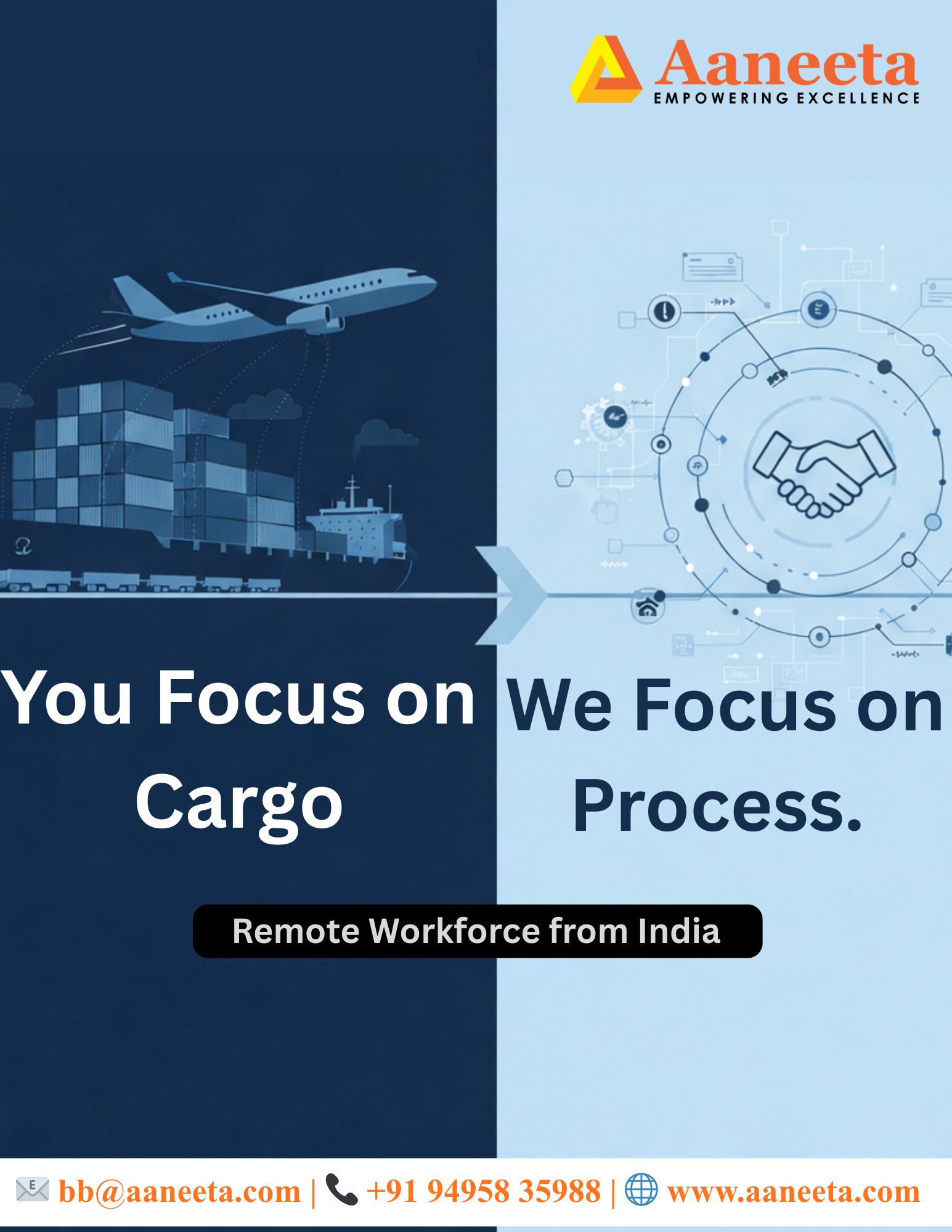
Core Team → Cargo Execution
Remote Team → Process Execution
This separation allows each function to operate at peak efficiency.
How a Remote Workforce Adds Value
A dedicated remote operations team can manage:
- Documentation preparation & review
- BL amendments & submissions
- Tracking & milestone updates
- Freight rate uploads
- POD & delivery follow-ups
- Data entry in TMS / ERP systems
All while your on-ground team focuses on shipment movement and customer relationships.
Why Remote Support Works
Operational Continuity
Work continues across time zones.
Scalable Capacity
Add resources during peak seasons without long hiring cycles.
Process Standardization
Trained teams follow SOPs for accuracy and compliance.
Cost Optimization
Reduce admin overhead while maintaining productivity.
Redefining Focus in Logistics
Success in freight forwarding today depends on clarity of focus.
When your internal teams are overloaded with paperwork, they have less time for planning, coordination, and growth.
But when process management is handled by specialists, your business gains speed and agility.
You manage the cargo that drives global trade.
A remote workforce manages the processes that keep it moving.
Because in logistics, efficiency isn’t only on the road, sea, or air — it’s also in the workflow behind it.
www.aaneeta.com