In the past few years, global logistics has seen unprecedented shifts—from pandemic-induced bottlenecks to geopolitical tensions reshaping trade routes. With container shortages, port congestion, and shifting sourcing strategies, logistics companies are being pushed to rethink not just how they operate, but how they sell. While operational excellence remains a must, the ability to proactively respond to client needs, enter new markets quickly, and offer real-time communication is now a critical differentiator. This is where outsourced sales support has emerged—not as a cost-cutting tool, but as a strategic lever for growth and resilience.
The Game Has Changed: Sales Needs Are Evolving
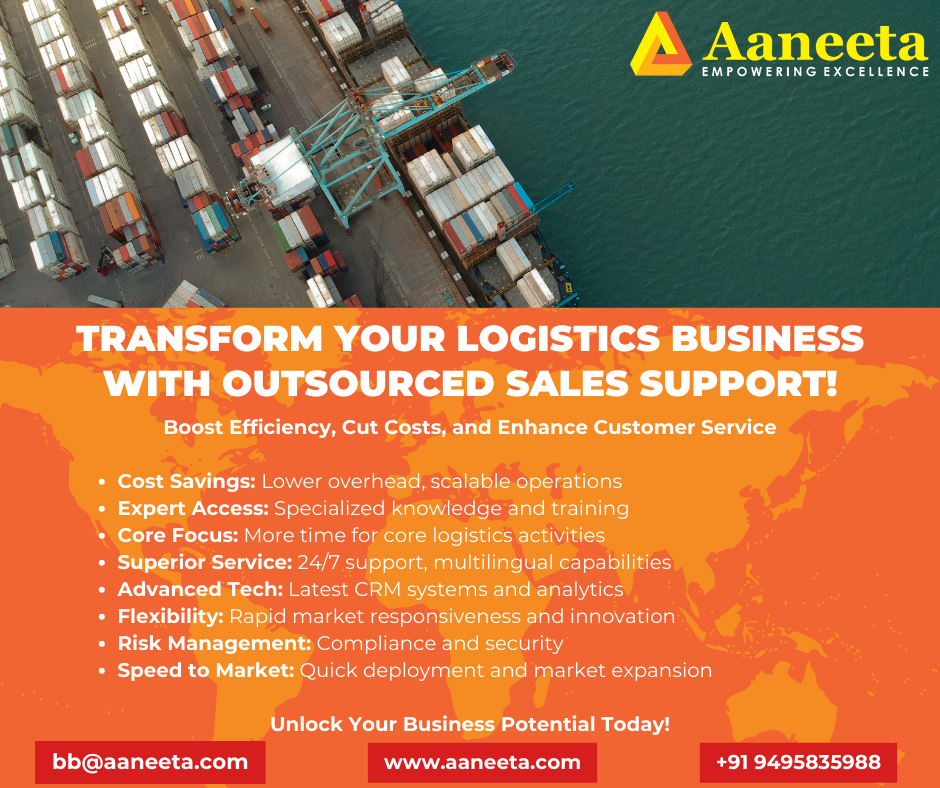
In 2024, several shipping giants and freight forwarders reported a steep rise in client churn, largely attributed to delayed response times and lack of customer engagement. Clients today expect faster quotes, multilingual support, instant updates on shipment movement, and tailored solutions—not just rates and routes. Outsourced sales teams, especially those trained in logistics-specific workflows, bring:
- Round-the-clock coverage, ensuring that global time zones don’t disrupt customer service.
- Real-time CRM integration, meaning every interaction is tracked, analysed, and optimized for the next touchpoint.
- Multilingual fluency, allowing better engagement across Asia-Pacific, the Middle East, and Latin America.
Beyond Selling: It’s About Scaling Relationships
As the industry shifts from transactional to relational selling, logistics firms are realizing that sales is no longer just about closing a deal. It’s about guiding clients through customs regulations, documentation, last-mile delivery expectations, and contingency planning. An outsourced sales team can act as an extension of your core operation, offering:
- Strategic account management for high-value clients.
- Quick onboarding of new lanes, services, and tools.
- Seamless collaboration with internal dispatch, warehousing, and billing teams.
The 2025 Outlook: Adapt or Miss the Momentum
According to the recent Global Logistics Market Insight Report, companies leveraging hybrid sales teams (internal + outsourced) grew their market share by 18% over the past year, compared to 6% for those relying solely on in-house teams. This momentum reflects a deeper truth: responsiveness, agility, and consistent communication are becoming non-negotiable.
In today’s logistics ecosystem, you don’t just compete on delivery speed—you compete on sales speed. Outsourcing sales is no longer a tactical move. It’s a strategic necessity in a borderless, digital-first world. As trade corridors continue to shift and customer expectations evolve, the logistics companies that embrace flexible, tech-enabled sales support will be the ones shaping the future—not reacting to it.